I’ll be switching things up a bit this week with some good old fashioned giant monster mayhem. This one’s even kind of a ghost story. Make sure to check in on Friday for my review of Lake Michigan Monster, a very different creature feature.
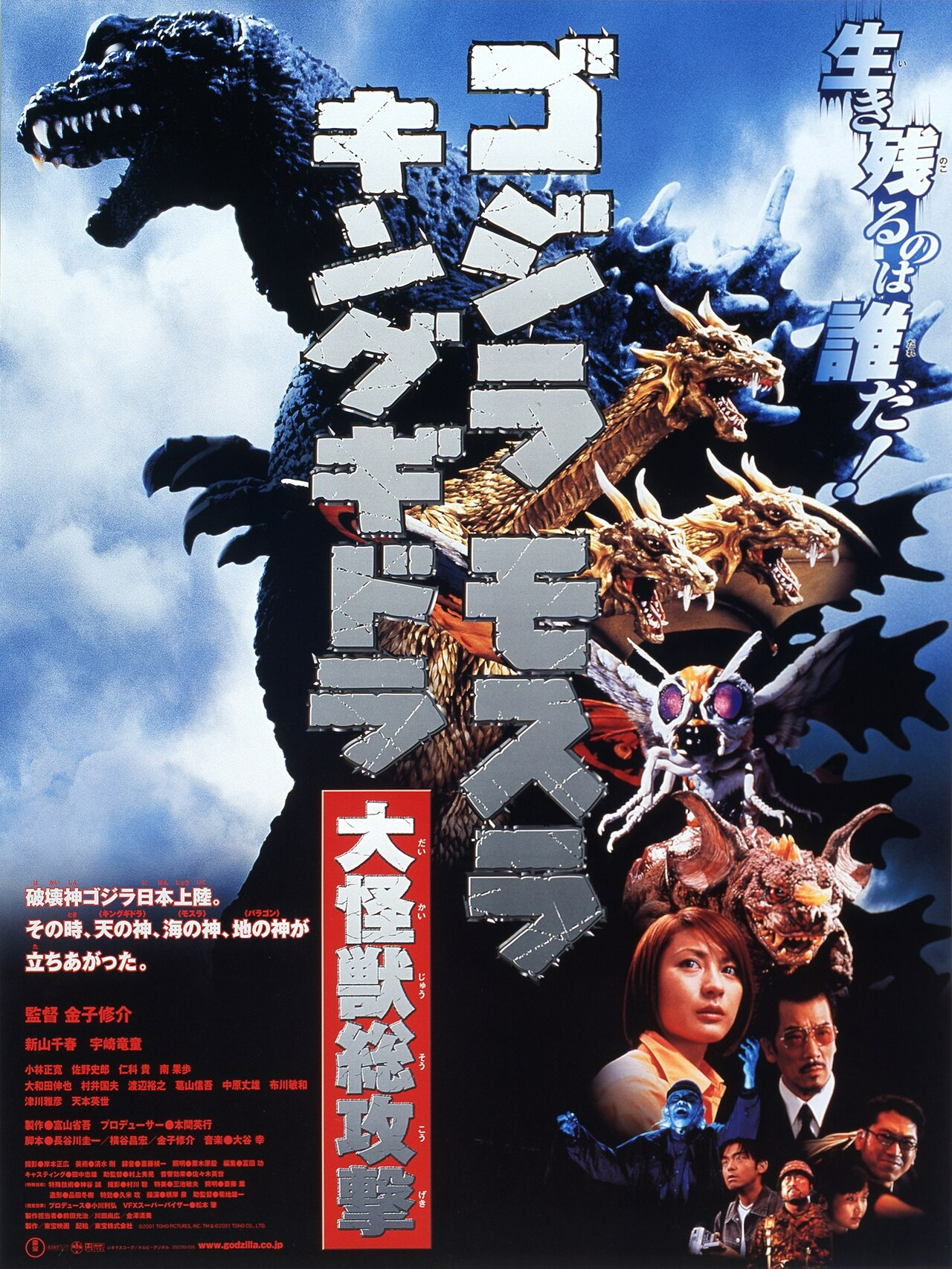
Godzilla, Mothra, and King Ghidorah: Giant Monsters All-Out Attack (2001):
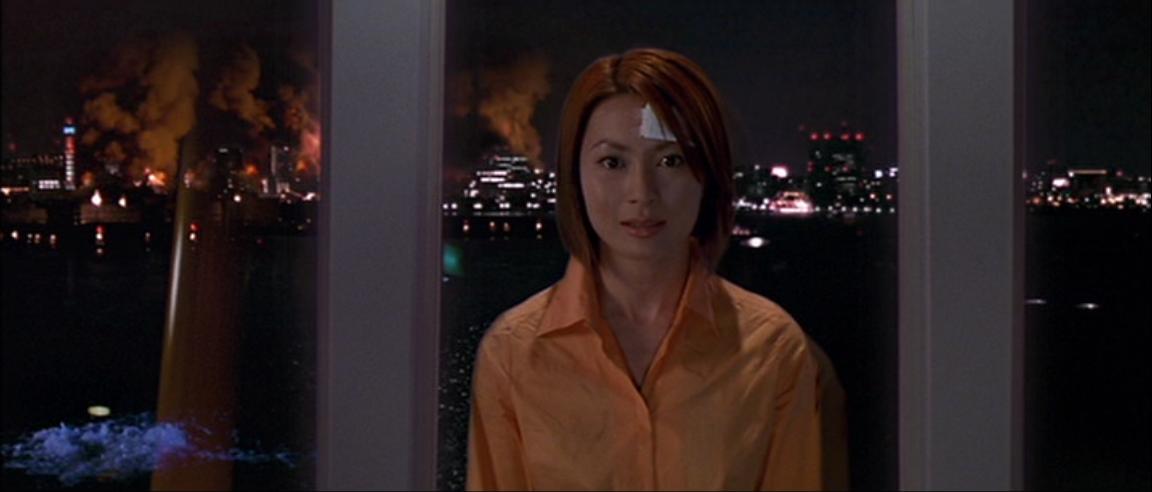
The Plot: Nearly fifty years after being killed by Dr. Serizawa’s Oxygen Destroyer, Godzilla returns as an onryō, a vengeful spirit summoned by the restless souls of soldiers and civilians killed by Japan during World War II. Yuri Tachibana (Chiharu Niiyama), a fledgling reporter relegated to making paranormal “documentaries”, lands the story of a lifetime when she learns of three ancient “Guardian Monsters” who may be able to save Japan from Godzilla’s wrath. Will Mothra, King Ghidorah, and Baragon be able to stop the ghostly Godzilla? Will Yuri be able to convince her father, Admiral Tachibana (70s rocker Ryudo Uzaki) of the kaiju threat before it’s too late?
Toho’s Godzilla series is a bit like James Bond in terms of continuity. It’s always the same monster, but different filmmakers have different interpretations, and the studio tries to adapt the creature to suit the times. The original Shōwa-era films (1954-1975) take him from harrowing nuclear war metaphor to kid-friendly hero with hippie allies*. The Heisei series (1984-1995) is Godzilla’s Daniel Craig era; a gritty reboot following a single continuity in which Godzilla is a force of nature and there are recurring human characters like teen psychic Miki Segusa (Megumi Odaka)**. In the elegiac final entry, Godzilla vs. Destroyah, Godzilla dies.
The following Millennium series (1999-2004) wasn’t originally supposed to happen. Toho didn’t intend to revive the character until 2005, but a planned Hollywood trilogy fizzled out with 1998’s Godzilla (1). The Millennium films are an anthology of sorts. Of the six movies in the series, four are direct sequels to the original 1954 film, and one takes place in its own continuity that remixes all the Showa entries***. The first two Millennium films, Godzilla 2000 and Godzilla vs. Megaguirus, have a “back to basics” feel. They update Godzilla’s look and introduce some new ideas to the series, but feel of a piece with previous films and act as a kind of palate cleanser following the American version****.
And then there’s Godzilla, Mothra, and King Ghidorah: Giant Monsters All-Out Attack, which will henceforth be referred to as GMK. Director Shusuke Kaneko, who also helmed the excellent Heisei Gamera trilogy, takes the character in a bold new direction while still delivering the kaiju brawls audiences expect. The result is a mixed bag that nevertheless signifies growth for the series. It tests the limits of what Godzilla can represent, or at least what Toho is willing to allow. Does he always have to be a literal representation of mankind’s scientific hubris? Why not a wrathful spirit to confront Japan’s spiritual burdens? How far can you stray before he isn’t Godzilla anymore?
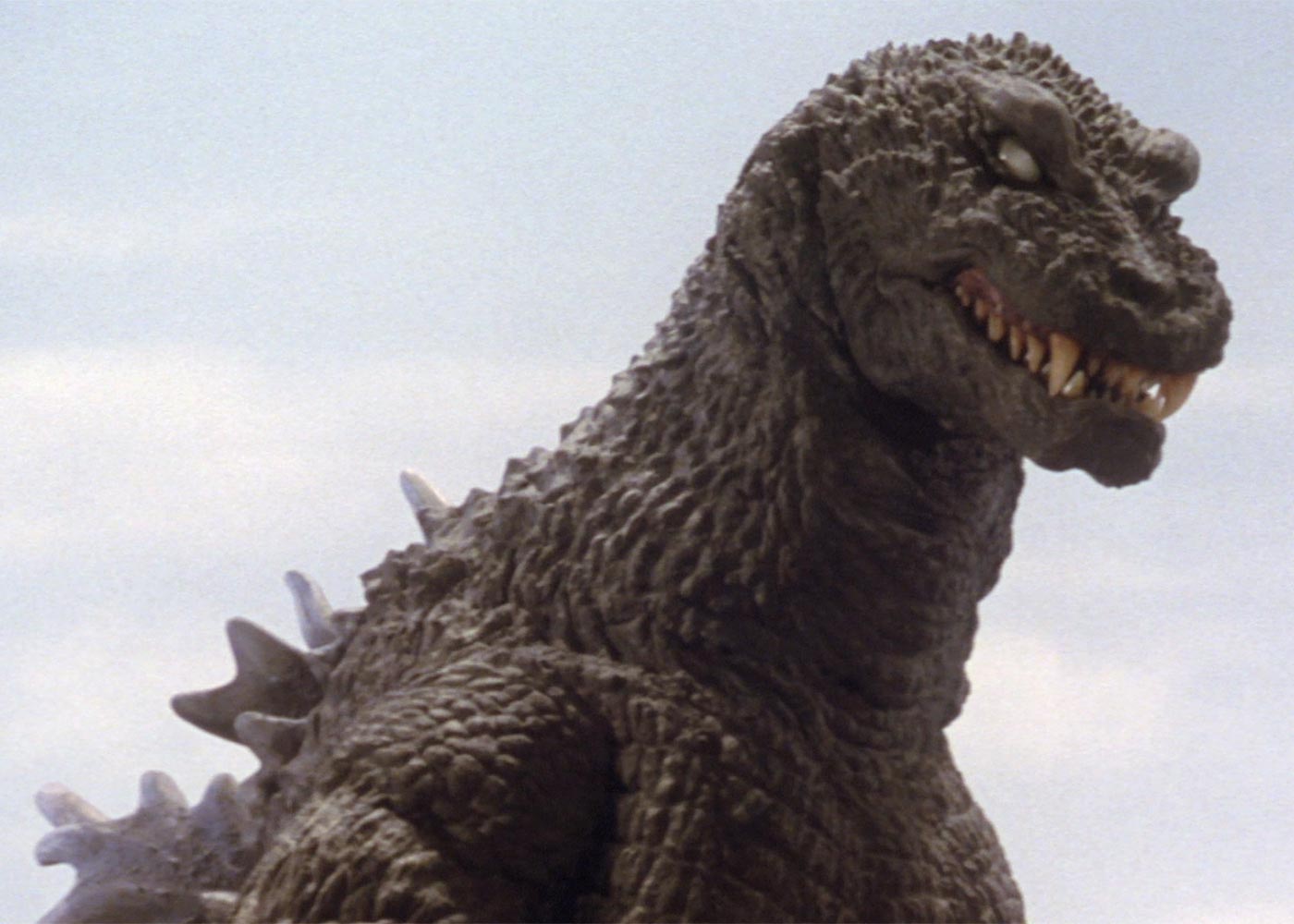
In terms of what Godzilla signifies and how he’s portrayed, this is the biggest departure the series had taken up to that point. Godzilla and King Ghidorah have essentially swapped roles here. Godzilla hasn’t always been heroic, but this is the first time that he’s actually positioned as the Bad Monster. An early fight with the quadrupedal Baragon ends with Godzilla stomping his already defeated opponent into the ground and then vaporizing him. He’s bigger, scarier, and more vindictive than the other monsters. Kaneko and Special Effects Director Makato Kamiya even had Mothra, Baragon, and Ghidorah scaled down to make Godzilla a more imposing figure (2).
The film’s central concern is that younger generations have forgotten the past. They convince themselves that Godzilla never existed, or make light of the devastation he wreaked. The human casualties here aren’t collateral damage, but personal retribution. Godzilla makes eye contact with a woman who earlier dismissed his existence before incinerating her with his fire breath. The Guardian Monsters also dole out some punishment; the film opens with Baragon and a larval Mothra killing different groups of rowdy teens who have desecrated local shrines. A character later explains that the Guardian Monsters are protectors of the land, not the country
GMK is interesting conceptually, both as a film in conversation with the rest of the franchise and as a response to Japan’s efforts to move beyond the shadows of World War II (Hiroshima and Nagasaki, but also Nanjing and Bataan). At what point should a country stop paying for the sins of its past? Can it ever? Acknowledged or not, these events resurface in unexpected ways. The defeated nuclear menace returns to reckon with war crimes, a traditional spirit punishing Japan for its modern transgressions. There are echoes, too, of the Imperial government’s lies to its citizens in the revelation that the Japanese Defence Force took credit for killing Godzilla in 1954 after Dr. Serizawa destroyed his research and died with the Oxygen Destroyer. What kind of future can be built upon such a shaky foundation?
That the film has so much on its mind makes it a somewhat frustrating watch. Very little of the script is actually dedicated to the characters reckoning with these ideas. The characters aren’t hollow by any means—the central relationship between Yuri and her father is fairly touching—but GMK is caught between director Shusuke Kaneko’s grand vision and the requirements of blockbuster filmmaking. Don’t get me wrong, I wouldn’t be such a fan of these movies if I didn’t enjoy extended scenes of kaiju destruction. It’s just that those scenes feel a little at odds here with what Kaneko is trying to accomplish thematically. I suppose there’s only so far you can go while still maintaining mass appeal. After all, this is a film that was released theatrically as a double-feature with the Hamtaro movie Adventures in Ham-Ham Land (2). One has to wonder if anyone responsible for that decision had actually seen either film.
Still, it’s hard not to feel that this non-standard Godzilla needed a non-standard plot, the way that 2016’s Shin Godzilla (which I reviewed here) pairs its truly gnarly creature design with a surprisingly fast-paced tale of dedicated professionals wading through bureaucratic inefficiency in order to deal with a natural disaster. Then again, maybe GMK walked so Shin Godzilla could run. Whatever its shortcomings, GMK is more than just a significant step for the franchise. Shusuke Kaneko’s film mostly succeeds on its own merits, using kaiju battles as a launching point for thoughtful questions about Japan’s past, present, and future. What could be more Godzilla than that?
Godzilla, Mothra, and King Ghidorah: Giant Monsters All-Out Attack is available to rent on Amazon Prime and Apple TV Plus.
*Note: The different “eras” are named after the reigning Japanese Emperor at the time, with the exception of the Millennium series. The timelines don’t always line up precisely—though Emperor Shōwa’s reign didn’t end until 1989, The Return of Godzilla (1984) is definitely a part of the Heisei series—and the Millennium films eschew the naming convention altogether, but the groupings make sense.
**No Time to Die desperately needed a teen psychic character.
***Godzilla: Final Wars is a cameo-heavy, nostalgic victory lap for Godzilla’s 50th anniversary. It also features the Japanese Godzilla beating up the 1998 American ‘Zilla while a Sum 41 song plays in the background. Ah, 2004.
****There’s a place in my heart for the ’98 Godzilla, but it has much more in common with American B-horror movies of the 1950s than it does with the King of the Monsters.
- Kalat, David. A Critical History and Filmography of Toho’s Godzilla Series. Second ed. McFarland & Company Inc., Publishers, 2017.
- Ryfle, Steve and Ed Godziszewski. Godzilla: The First 70 Years. Abrams, 2025.
 Rooster Illusion
Pingback: Octoberween: ‘Frankenstein’ | Rooster Illusion