It’s Halloween, and we’re bringing our most jam-packed Octoberween in years to a close. Second Breakfast shared a delightful double feature with two very different takes on Frankenstein. I roamed across time and tone to bring you reviews of 28 Years Later; Fido; Good Boy; Godzilla, Mothra, and King Ghidorah: Giant Monsters All-Out Attack; Lake Michigan Monster; Dracula’s Daughter; and The Vourdalak. If all that isn’t enough to lift your spirits, well, I’m out of ideas. I was really banking on seasonal film criticism fixing everything.
To wrap things up, here’s a review of Guillermo del Toro’s long-awaited Frankenstein adaptation. It has its moments, but it’s no “Treehouse of Horror II”.
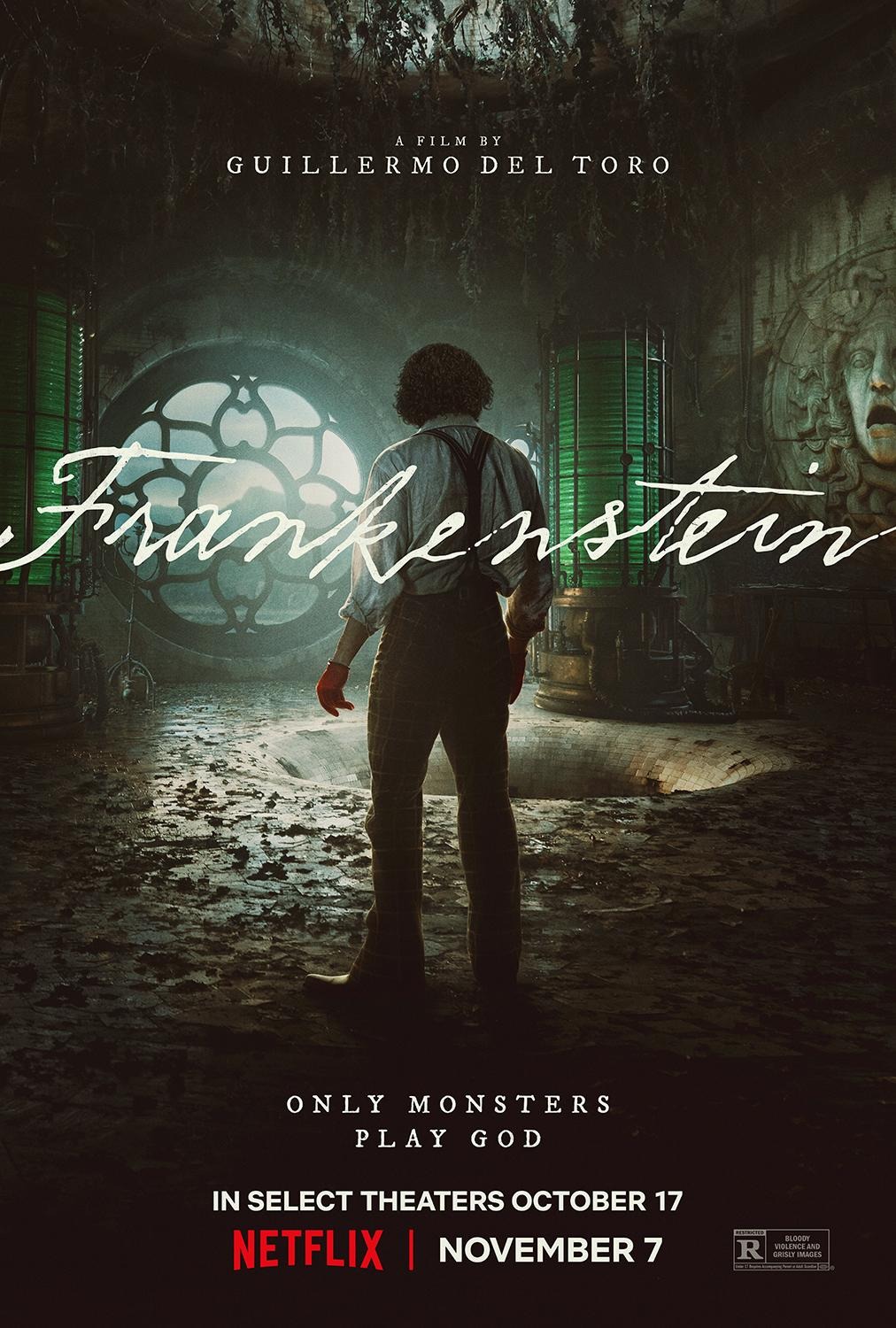
Frankenstein (2025):
The Plot: After his mother dies giving birth to his younger brother, Victor Frankenstein (Christian Convery in youth, Oscar Isaac as an adult) vows to surpass his cruel surgeon father (Charles Dance) and conquer death. He eventually succeeds in granting life to a Creature made from stitched-together corpses (Jacob Elordi). Frankenstein’s great triumph soon begets tragedy, as the Creature reacts to a hostile world.
Guillermo del Toro has famously been trying to adapt Mary Shelley’s Gothic classic for several decades. It’s been his white whale, and a fascinating “what if” for fans of his work. It’s a little unfortunate that it comes at this point in his career, burdened with the weight of expectation and following thirty years of movies that have frequently been inspired by the original novel. Frankenstein’s themes and character beats are well-trod ground for del Toro, and what I think is meant to be a triumphant culmination, a well-earned victory lap for a genre filmmaker finally acknowledged as an auteur, instead feels like a creative regression.
Frankenstein has the sumptuous set and costume design viewers have come to expect from del Toro—he’s operating in Crimson Peak mode here—and the two leads both give vivid, engaging performances. The film suffers, however, from poor pacing and a bit too much reverence for the source material. In spite of some pretty significant changes to the novel, such as the inclusion of Christoph Waltz’s urbane arms dealer as Frankenstein’s patron or Elizabeth’s (Mia Goth, kind of wasted here) new role as the scientist’s future sister-in-law instead of his fiancee, Frankenstein doesn’t venture far enough afield.
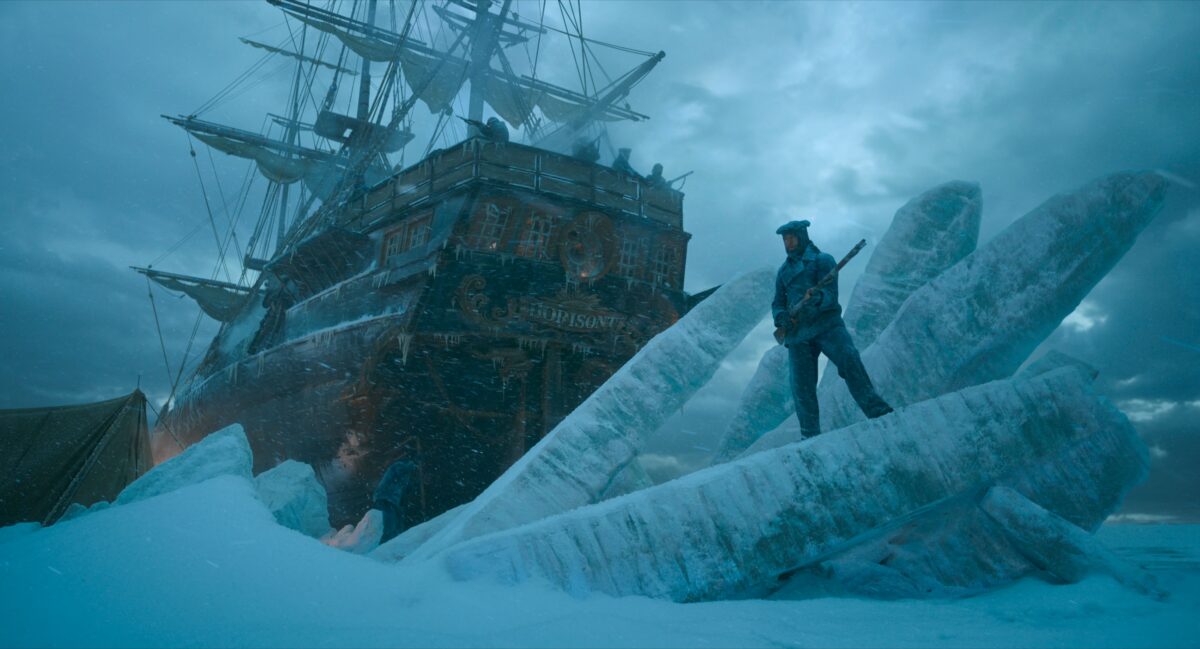
At two and a half hours, the film drags, spending arguably too much time establishing Frankenstein’s world and the nature of his experiments. By my estimation, the Creature doesn’t wake up until about the hour mark. There’s plenty to like about that first section, and Oscar Isaac makes for a compelling lead, but it doesn’t leave much room for the core relationship between creature and creator that del Toro tries to position as the heart of the film. By the time we’ve gotten through the interminable sequence following the Creature’s sojourn in an abandoned mill and ill-fated friendship with an old blind man, there’s little time for the two leads to interact. It doesn’t help that the film’s portrayal of the Creature places such a heavy emphasis on his purity and innocence that the revenge campaign that makes up the bulk of the novel is mostly reduced to one confrontation.
That having been said, Isaac and Elordi both do good work here. Isaac especially excels at making Frankenstein understandable and layered without being entirely sympathetic. Rather than the whinging coward from the book, this version of the titular doctor is proud and charismatic, ambitious and manipulative. Frankenstein by way of Lord Byron. Here, his moral failings aren’t the result of cowardice but of a profound arrogance. Del Toro also reworks Frankenstein’s father into a cold, abusive taskmaster in an attempt to lend the scientist’s actions some added pathos.
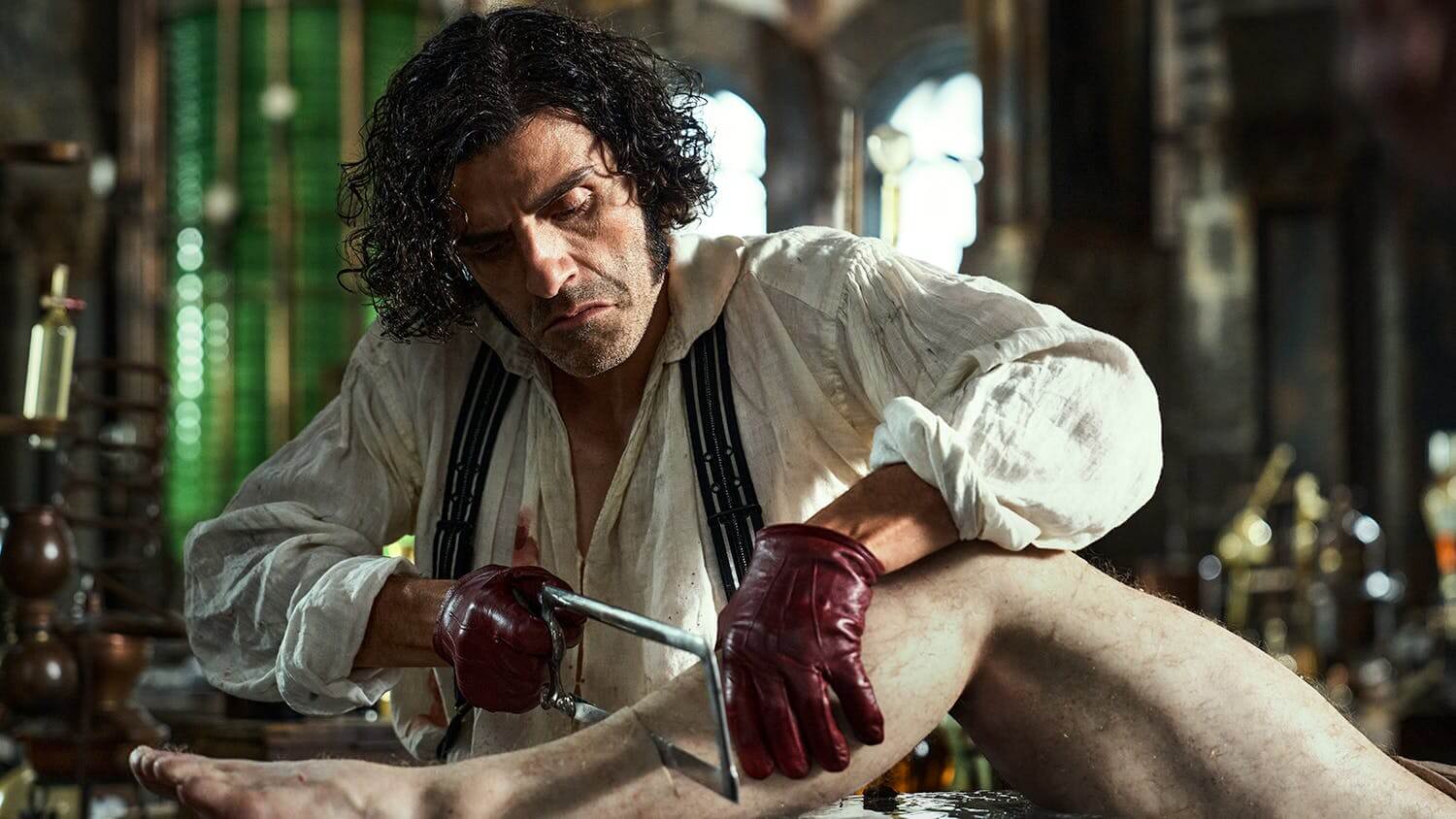
In the film, Victor doesn’t immediately abandon his creation, instead attempting to coax some signs of intelligence from the Creature before deciding to destroy the experiment in a fit of fear and frustration. It’s the latter emotion that proves to be the key to the character’s humanity. Del Toro casts Frankenstein as a Bad Dad, totally ill-equipped for the trials of parenthood. There’s a lengthy sequence in the middle of the movie that shows Frankenstein slowly losing control of himself in the face of the Creature’s inability to say anything other than “Victor”. He doesn’t know how to handle his own shortcomings and so directs that anger outward, violently lashing out at his “offspring”. Of all the passages unique to del Toro’s version of the classic tale, this is among the most effective. Isaac nails the curdled self-loathing hidden beneath the character’s high self-regard. Elordi, for his part, gives an appealingly understated performance that balances the Creature’s initial child-like simplicity with his growing awareness and eventual capacity for violence. However, the film’s interest in the character’s innocence ends up becoming a weakness in the long run, shortchanging both the monster and the cyclical abuse theme it spends so much time setting up.
Though del Toro’s sympathies clearly lie with the Creature, his determination to portray the character as unequivocally “good” ends up robbing him of any complexity. In the novel, he murders Victor’s younger brother and frames a servant for the crime, then kills the scientist’s best friend Henry and wife Elizabeth. Without spoiling too much of the film’s truncated third act, I’ll say that this version of the Creature only ever kills in self-defense or accidentally. By removing his more barbarous acts, del Toro also eliminates the most interesting ethical questions posed by the novel, as well as the Creature’s agency. Yes, Frankenstein’s greatest crime is abandoning his creation, and that makes him responsible for the ensuing carnage, but if the Creature is a person, then shouldn’t he also bear responsibility for his own terrible actions? Can children ever truly be independent from their parents? What do parents owe their kids, and what does God owe to humanity? Do humans have free will?
Frankenstein smooths down the monster’s rough edges and in doing so largely ignores these questions and its own early characterization. Victor Frankenstein is just the Bad Dad, the Real Monster, and the Creature is only Misunderstood and Good. It’s not even that I disagree with these interpretations, it’s that they’re presented in such broad strokes. In making the already sympathetic Creature more palatable, del Toro loses what makes him a memorable figure to begin with. Sometimes having agency means making bad choices and doing the wrong thing.
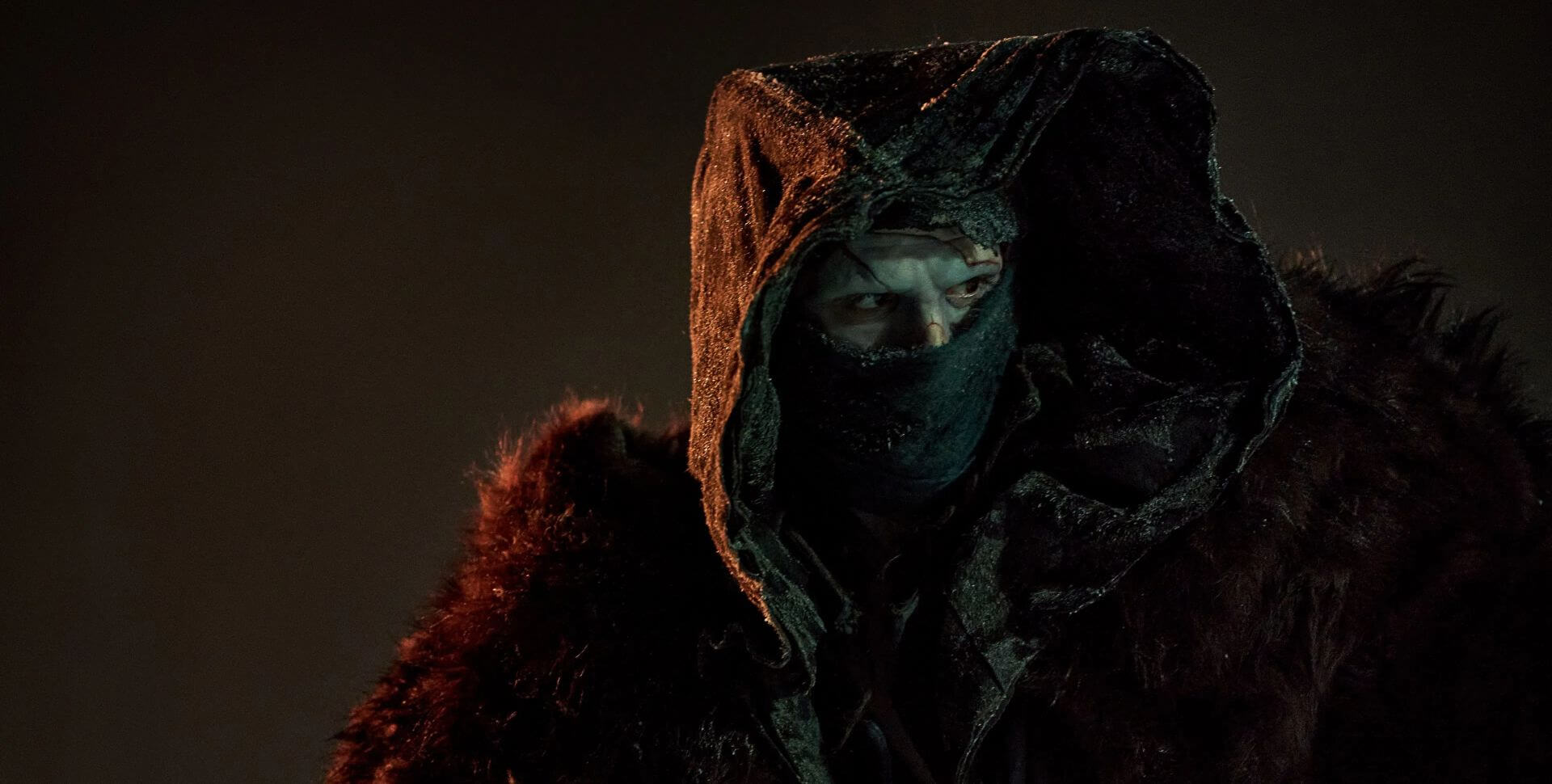
Despite its flaws, Frankenstein has much to recommend it. Visually, the film is a Gothic feast for the eyes. Mia Goth may have the largely thankless task of playing the Female Character Who Tells the Lead He’s Gone Too Far, but at least she gets to wear some stunning gowns. Oscar Isaac and Jacob Elordi largely carry the film, even if they are ultimately let down by the script. Though this version of Victor Frankenstein ends up oversimplified, he’s still more compelling than the character in the novel*. Jacob Elordi is good enough as the Creature that I wish there had been more of him.
If you missed it during its limited theatrical release, Frankenstein is definitely worth the watch when it comes to the World Wide Web. If you see it on a dark and stormy night, so much the better.
Frankenstein is playing in select theaters through November 4th, and will begin streaming on Netflix on November 7th.
Until next time, Happy Halloween! Later days.
*I’ve made no secret of my animosity towards Book Victor.
 Rooster Illusion