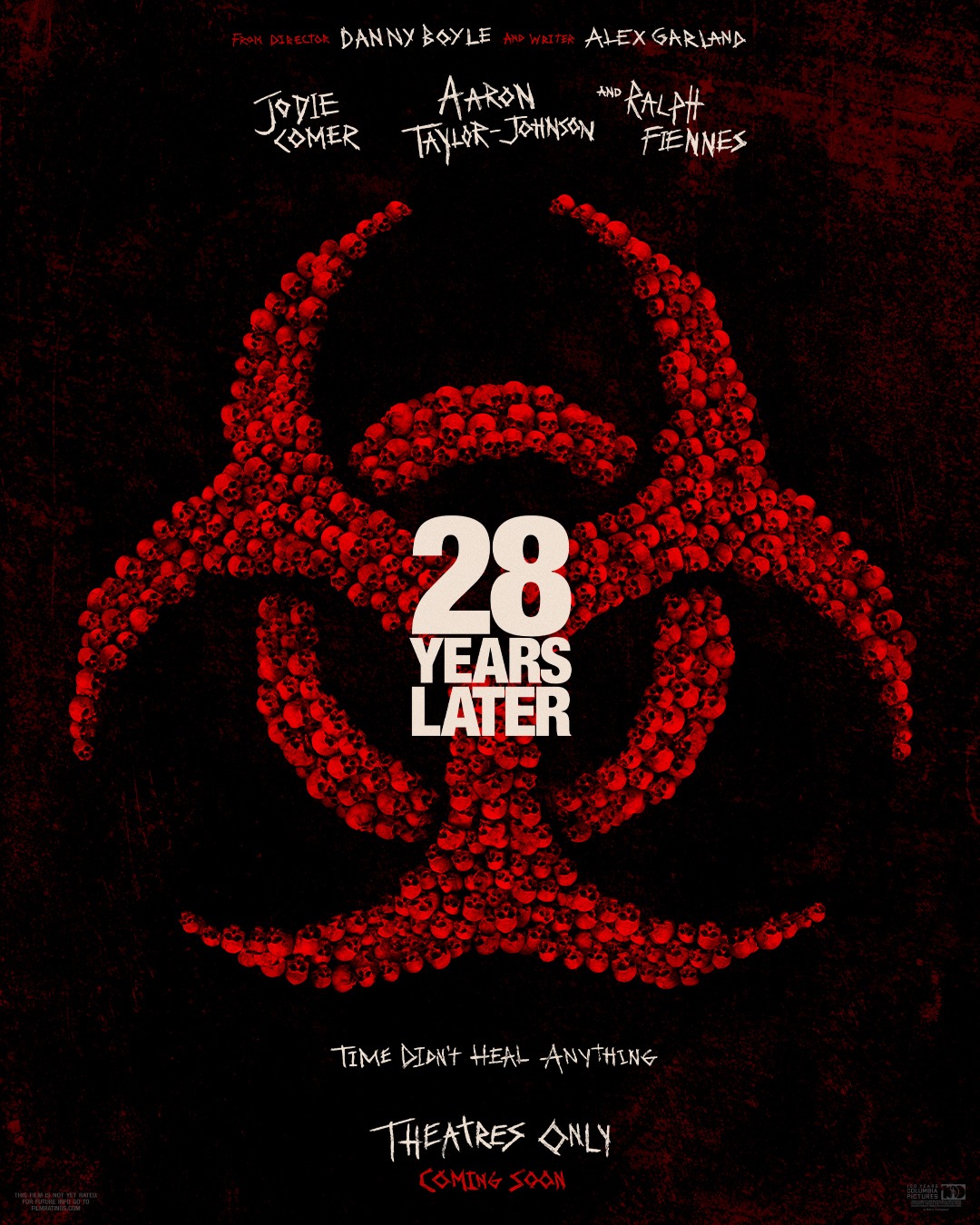
28 Years Later (2025):
The Plot: Twenty-eight years after the “Rage virus” swept the United Kingdom (and no other countries, retconning the ending of 28 Weeks Later) a community of survivors has cobbled together a life on Lindisfarne, a small island off the coast of northeast England. Twelve-year-old Spike (Alfie Williams) accompanies his father Jamie (Aaron Taylor-Johnson) on a trip to the dangerous mainland. What’s meant to be a simple rite of passage becomes the start of a much grander journey for the young boy when he learns of a mysterious doctor (Ralph Fiennes) who may be able to cure Spike’s ailing mother (Jodie Comer).
Danny Boyle has done it again. He’s had his hits and misses, but he’s two for two when it comes to legacy sequels. Like T2: Trainspotting before it, 28 Years Later is an unexpectedly moving oddity. The film’s stylistic excesses and violent terrors are enriched by an undercurrent of genuine tenderness and melancholy. Where T2 has a kind of “what fools these mortals be” wry affection for its aging characters’ messy efforts to straighten out their lives, 28 Years Later makes an earnest appeal for its audience to absorb the same lessons as its young protagonist: Don’t just accept things as they are, make an effort to understand why they are. Open your heart to loss. Remember the dead.
The film has its fair share of tense chases and gnarly gore—it is a horror movie, after all—but never at the expense of the characters. Alex Garland’s (28 Days Later, Ex Machina) nuanced script populates this post-apocalyptic wilderness with three-dimensional people. The coming-of-age tale situates Spike at the border between childhood and adolescence. He’s a thoughtful young boy, navigating a world that’s required him to grow up too fast. Spike’s mother Isla is bedridden; she’s temporally-addled and prone to mood swings. We get the sense that the caretaker role has fallen more and more to Spike of late. Jamie isn’t a bad man, but he’s buckling under the pressure. Perhaps that’s why he insists that his son is ready for the mainland trip, even though the traditional age is fourteen.
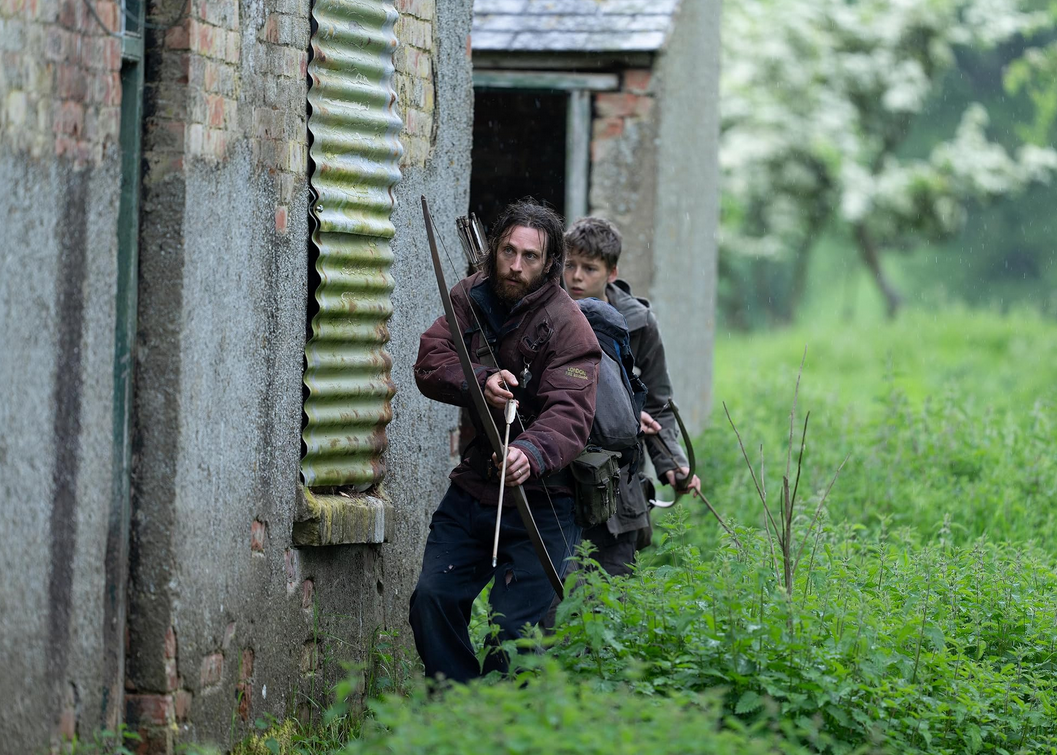
As stressful as it is watching the pair outrun hordes of infected (the word these films use instead of “zombies”, since they aren’t technically dead), the real devastation lies in the quieter moments. It’s in the way that Spike slowly learns to stop idolizing his father, or in Jamie’s confused anger as he feels his son growing apart from him. These domestic scenes are where the cast really shines, especially Alfie Williams, in his feature film debut. The young actor is outstanding, playing big emotions just under the surface. There’s a shot of Spike overwhelmed at a party, burdened by exaggerated praise and surrounded by desperately drunk grown ups, that has stuck with me as much as anything else I’ve seen this year*. Williams is clearly talented, bolstered by excellent scene partners and sensitive direction.
I’ve criticized Aaron Taylor-Johnson in the past for wooden acting, but he gives an understated, complex performance here. He’s simultaneously playing the father that Spike sees and the real man who can’t help but disappoint. Jodie Comer’s performance as Isla is similarly rich. She finds depth in performing illness that manifests superficially as madness. Like Taylor-Johnson, she’s playing the double-parent that exists for all children as they start to see adults as people, but Isla is also slipping between good days and bad days, the present and the past.
I want to discuss Ralph Fiennes as well, but he shows up late enough in the movie that it’s difficult to do that without spoiling anything. I’ll say that he gives a wonderfully gentle performance and leave it at that.
In the interest of not becoming part of the problem, exaggerated praise-wise, I will say that Boyle and Garland take some big aesthetic and tonal swings that will definitely not work for everybody. Arrows strike zombies in a series of freeze frames shot from different camera angles. I think it’s meant to be jarring, to distance the viewer from the violence in a way that makes us question its appeal, but I also know people who think it just looks a bit silly. Your mileage may vary.
I’ve also seen critiques of the way Boyle splices action scenes with footage of medieval archers and WWI soldiers without building upon that footage to make a larger point about British Imperialism or the way history and myth get twisted to serve violent ends. To that, I say a) that’s not what the movie is about, and b) it’s a really clever visual shorthand to tell us how people are coping with their situation. These are the half-remembered bits of historical iconography from which someone might draw inspiration while they hunt zombies with a longbow. Connecting oneself to the past in this manner doesn’t always have to be in service of rah-rah nostalgic ahistoric patriotism. Sometimes it’s just comforting to be part of the continuum.
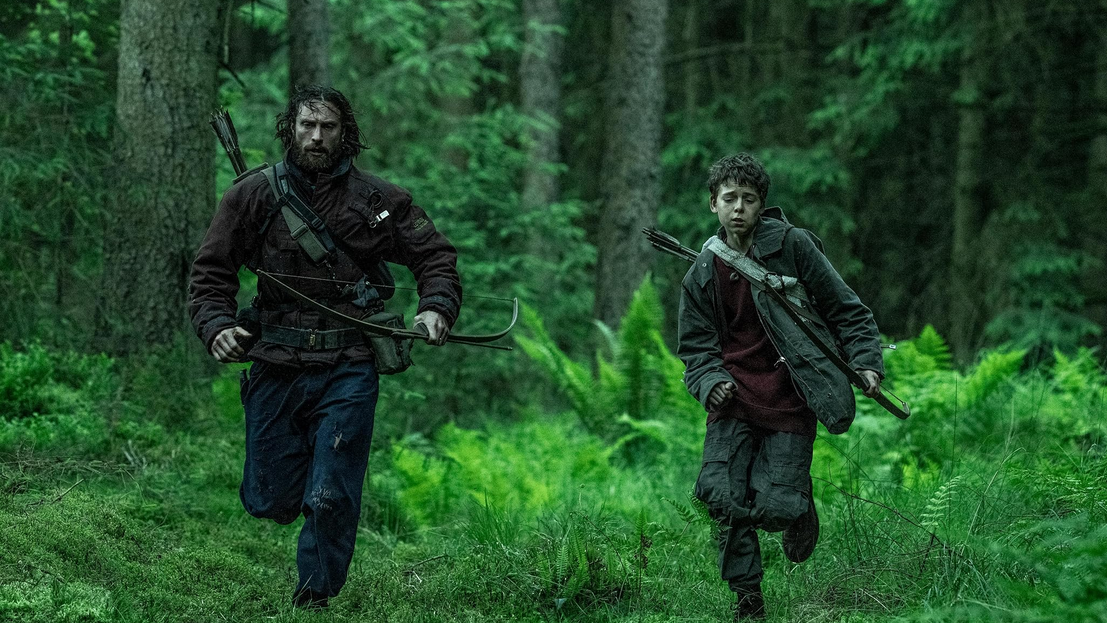
Ultimately, I don’t think the montage editing will be a deal-breaker for many people. This is Danny Boyle we’re talking about here. The man has a certain visual flair. However, audiences may find the film’s rapid tonal shifts off-putting. 28 Years Later will go from pulse-pounding terror to quiet domestic drama to sincere spirituality in quick succession. Scenes are allowed to breathe, but the movie doesn’t settle in one register for long. For this critic, the film flows well; those tonal shifts fit in with the larger tapestry. The score, by Scottish hip-hop group Young Fathers, does an excellent job of meeting the needs of each moment. Their work here ranges from oppressive electronica, as in the Kipling-sampling track “Boots”, to delicate piano-and-strings melodies like “Remember”. It’s haunting and occasionally beautiful, the perfect accompaniment for this scary, melancholy coming-of-age tale.
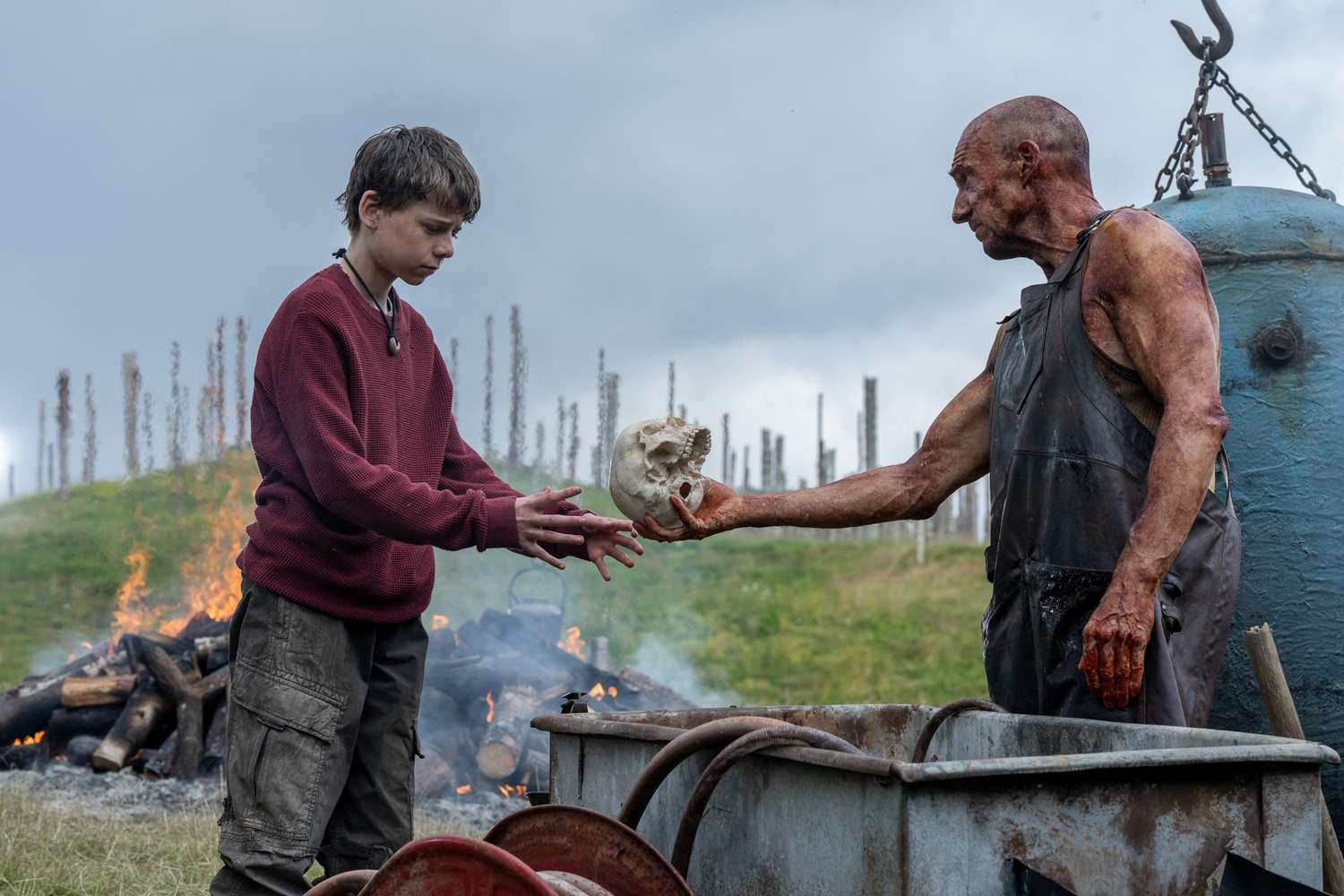
Your mileage may vary, but the film’s heart-on-its-sleeve emotional openness absolutely works for me. Where else will you find “memento mori” and massive piles of skulls used as as a sweet, uplifting way to cope with loss? And in a zombie movie? After decades of “we are the walking dead”-style gritty nihilism, life-affirming weirdness feels like a breath of fresh air. Boyle’s energetic direction and Garland’s heady script never lose sight of the small moments, the little gestures and connections that make humans human and life worth living, even when it’s painful. That vision is brought to life by a star-making turn from Alfie Williams and a trio of pitch-perfect supporting performances from Aaron Taylor-Johnson, Jodie Comer, and Ralph Fiennes.
28 Years Later is streaming on Netflix and available for rent on Amazon Prime, YouTube, and AppleTV+.
*And I also watched Drive My Car, so I know a thing or two about quietly heartbreaking cinema.
 Rooster Illusion
Pingback: Octoberween: ‘Frankenstein’ | Rooster Illusion