At this point, it’s probably safe to assume that my readers are familiar with my previous articles on this blog*. Is it safe for me to assume that you require, based on my previous writings and your own exquisite taste in movies, very little context on the topic of El Santo films? If not, here’s the quick version.
El Santo was a real-life Mexican wrestler, movie star, philanthropist, folk hero, and symbol of justice for the common man. Among other things, he appeared in around 50 films in which he harnessed his indominable combat prowess, unflinching fashion sense, and unimpeachable righteousness to vanquish ne’er-do-wells—everyone from common crooks and Nazis straight on through to mummies, witches, and, on more than one occasion, Count Dracula himself. Santo had it all.
I’ve seen over a dozen of his films at this point, and recently went on a modest spending spree to snatch up all of the discount Santo DVDs I could find in the state. Cozying up with my shiny new portable DVD player**, I sat down to enjoy a little double feature I’d recently acquired: Santo en El Museo de Cera and Santo y Blue Demon en El Mundo de los Muertos. Imagine the good-natured surprise with which I shrugged my shoulders and kept watching when I realized that this was a Mexican DVD***** and offered no subtitles at all. I do not speak Spanish.
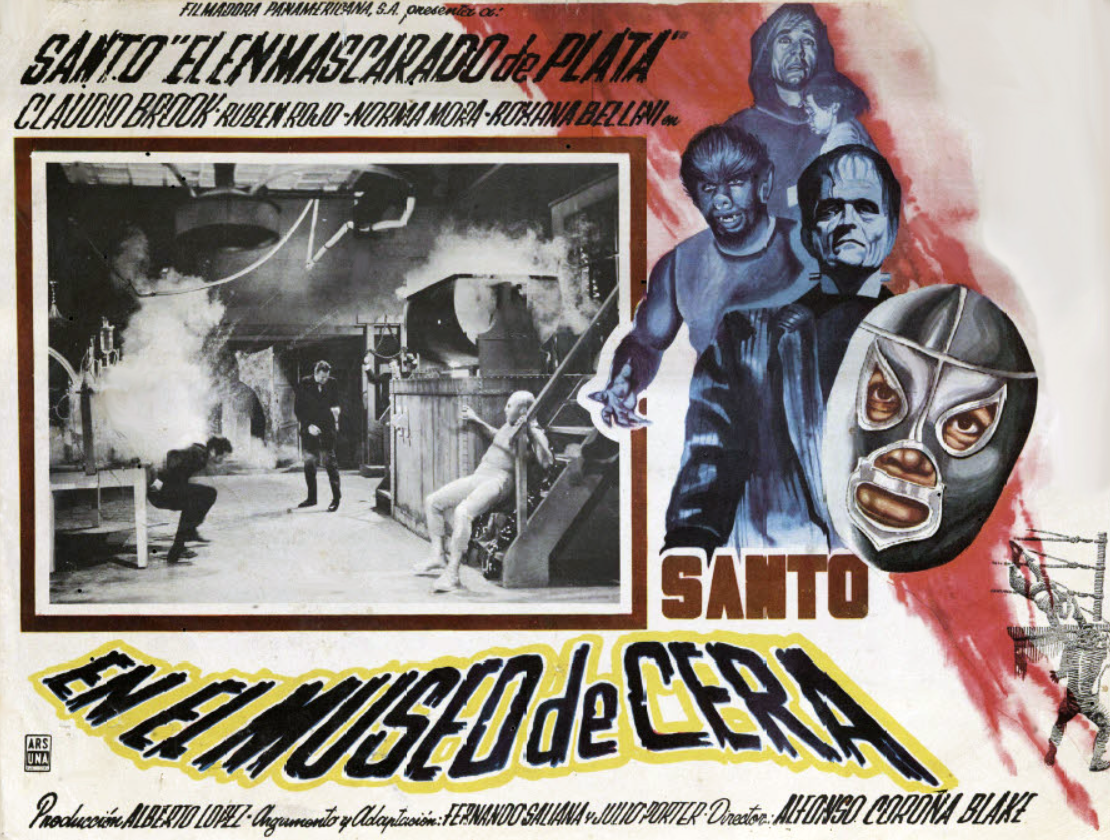
Santo en El Museo de Cera (1963)
If you’ve seen the 1953 Vincent Price classic House of Wax, you have a pretty good idea of the plot of Santo en El Museo de Cera, even if you don’t “sprechen sie Spanisch”, as the French would say. Replace House of Wax’s investigating inspector with Adam West’s Batman, and then replace Adam West’s Batman with Santo, and fella, you’ve got yourself a picture.
Santo’s approach to crime-fighting in this film cued several thoughts of West’s Caped Crusader in my mind. It possibly helped that he threw on a cape every time he went out to tussle with the baddies. He has some of kind camera phone that allies call him on when trouble’s afoot—sort of like shining the bat signal or calling the bat phone—and then he hops into his convertible and cruises the shadowy night from one hairy situation to another.
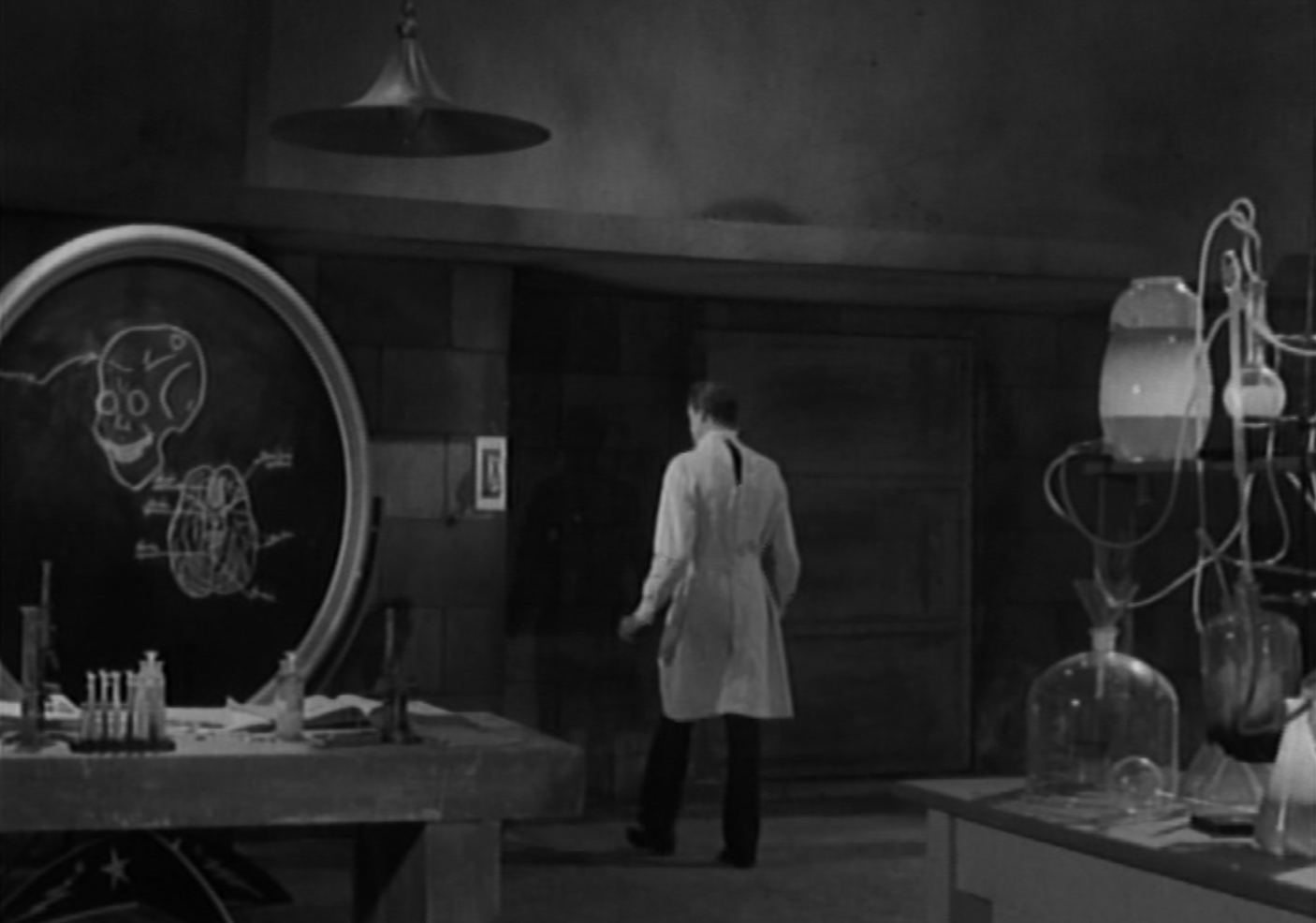
Now of course any casual reader and film historian will quickly note that El Museo de Cera predated Batman by three years. Is it wishful speculation to propose that just north of the border in sunny, swingin’ ’60s Gotham, one masked vigilante was directing his gaze south for inspiration from another? It is quite possible the world will never know.
Santo y Blue Demon en El Mundo de los Muertos (1970)
Like I said, El Museo de Cera is easy to follow. House of Wax + Batman’66, but the hero is a Mexican wrestler. I’m sure I missed the occasional nuanced plot point or witticism in the dialogue, but I always knew, at least in broad strokes, what the hell was going on.
Man oh man.
I cannot say the same for Santo y Blue Demon en El Mundo de los Muertos, one of the craziest movies I’ve ever seen in my life.
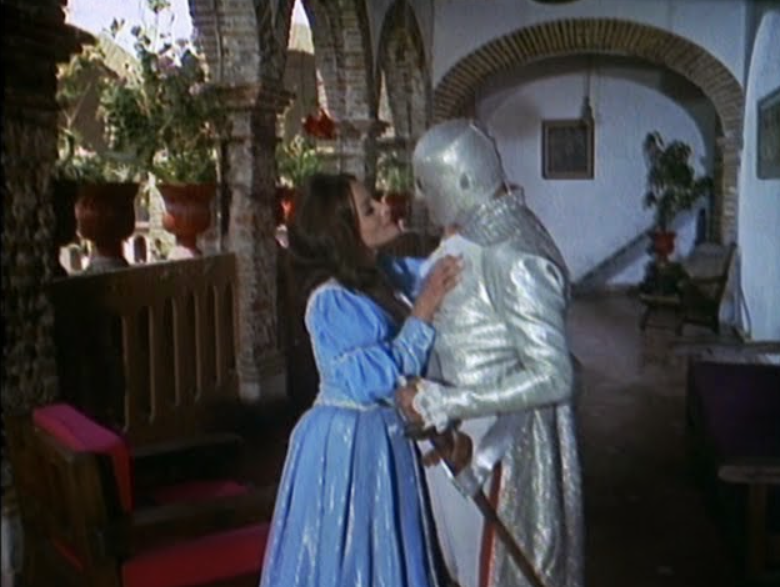
We open on what I quickly surmised to be Spanish Inquisitors torturing and burning accused witches sometime and somewhere in the 17th century. This, my brain tells me, is clearly expository. It will turn out that these were actually witches and we’ll jump ahead 300 years to the present day and Santo will have to square up against someone’s descendants or ghost or whatever.
Not the case.
Now the lead witch is none the worse for wear after all the torture and fire, and she raises an army of the dead and then summons popular 20th century Mexican sports personality Blue Demon to do her evil bidding. I think maybe the script was treating Blue Demon’s ring persona literally and that he may, in the context of this film, be among the denizens of hell, but, again, if this was the case, it belonged to dialogue I could not understand.
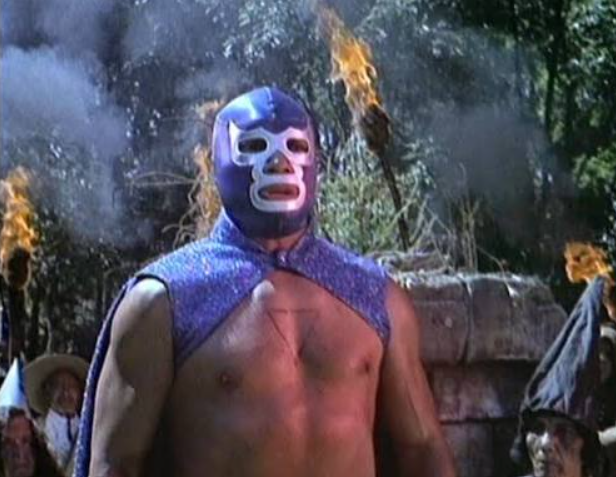
Evil cannot, of course, go unchecked. Enter Santo. El Enmascarado de Plata soon graces us with his presence, but as a 17th century version of himself. He’s got frilly sleeves, an era-appropriate sparkly cape, a tinny rapier at his side, and, naturally, his mask. Among other things, I am not a licensed historian of lucha libre. I had understood it to be a 20th century iteration of mankind’s oldest sport, but what do I know? It’s possible masked wrestlers were assisting the Inquisition in its quest against evil (dicey, Santo, as allegiances go), and I just didn’t know. I’m not in a position to correct anyone.
The minutes tick by and I’m settled in, comfortable in my new understanding that I’ve stumbled across a Santo period piece. Then comes the freakin’ time jump to 1970. We’re about halfway through now. The cast is all supplanted, so presumably we’re now dealing with various descendants. The witch appears as a ghost, possessing a woman I think may be Santo’s love interest, and generally causing havoc. El Santo’s on-again/off-again best friend/nemesis Blue Demon is, at this point, nowhere to be seen.
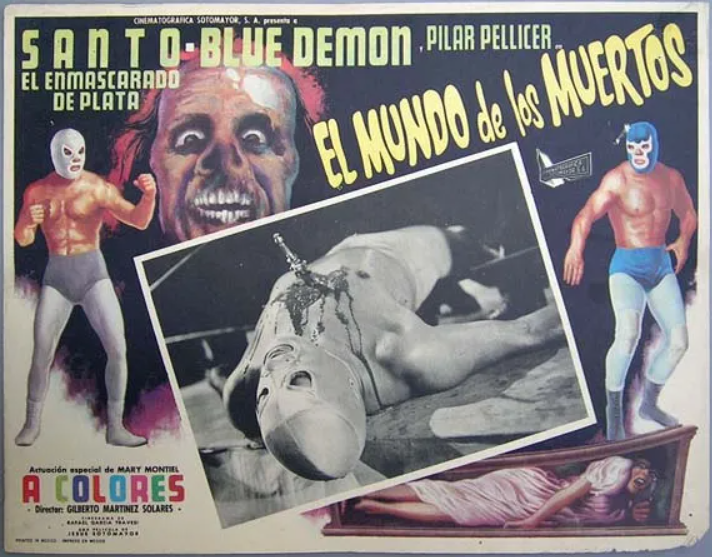
Again the minutes tick by and I have fully adjusted to the reality of the movie I now find myself watching. Absolutely nothing could have prepared me for the third act. El Santo and a priest prepare what I assume is an exorcism to extract the witch’s ghost from the young lady. All the usual hallmarks. But then we zoom in on El Santo’s masked face, the whole scene goes red and bang—our hero is running through a hellish jungle scape, with a fiery filter over the picture, fighting zombies and searching for his lady love.
To say that Santo’s adventures fighting evil in Jungle Hell or whatever are “metal” would constitute a royal understatement. I can’t say for certain if understanding the dialogue would have helped or hindered at this juncture. It probably would have helped me understand Blue Demon’s reappearance late on, but maybe not.
There is a right way and a wrong way to watch lots of movies. If there’s a wrong way to watch El Santo, I haven’t yet experienced it. As I continue my quest to hunt down as many hard copies as possible, I can’t wait to see what zany adventures he’ll get up to next.
*Surely I have no new readers, do I?
**It’s a Boifun***, if you were wondering****.
***Boifun’s motto is, “Magical time with Boifun.” They only make promises they know how to keep.
****You were.
*****Boifun is region-free.

