September 19th: AI remained the topic du jour in discussions and sci-fi shorts, a stark contrast to the wit and warmth of The Princess Bride. But hey, if true love can conquer the Fire Swamp, perhaps so too can the spirit of human creativity endure these tech-addled times. This post ended up being longer than I anticipated, but that’s the perk of having your own blog.
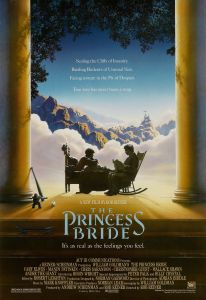
The Princess Bride (1987):
Director: Rob Reiner
Screenwriter: William Goldman
Starring: Cary Elwes, Robin Wright, Mandy Patinkin, André René Roussimof (Andre the Giant), Wallace Shawn
The Plot: A grandfather (Peter Falk) reads a book to his sick, sarcastic grandson (Fred Savage). In the book, farm boy Westley (Cary Elwes) and his true love Buttercup (Robin Wright) deal with pirates, an evil prince, Rodents of Unusual Size, and other trials as they fight to reunite. There’s nothing more powerful than True Love…
The Princess Bride is a perfect film. It’s got everything: “Fencing, fighting, torture, revenge, giants, monsters, chases, escapes, true love, miracles…”. All tones treated with the same commitment and exuberance, bolstered by Mark Knopfler’s lovely score. I don’t know how many times I’ve seen The Princess Bride, but this was my first time on the big screen. I came away even more appreciative of Rob Reiner’s eye for composition and the way he stages his actors. The duels! That castle! The Fire Swamp and the Cliffs of Insanity! It really is a beautiful movie.
Reiner’s work here exemplifies his talent for changing his style to suit the needs of a film. The fairy tale world of Florin looks exactly right the way the world of Stand By Me strikes the right balance between rose-tinted nostalgia and the grounded realism of childhood innocence colliding with harsh adult truths. Both films have excellent scripts and casts, but it’s Reiner’s unassuming filmmaking style that ties everything together.
After the film, festival Creative Director Richard Lovrich moderated a discussion with the Director of the NYS Writers Institute, Paul Grondahl. Their wide-ranging conversation covered Rob Reiner’s body of work, the slow death of independent American journalism, and the manifold dangers of artificial intelligence. Not always cheery, but engaging nonetheless.
Sci-Fi Short Film Block
Deep Space Degenerates (2026)
_Preview_ (2024)
Invasion ’53 (2025)
Laura Living Backwards (2024)
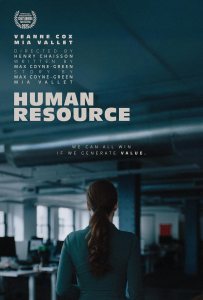
Human Resource (2025)
First Sight (2024)
After the triumph of the human creative spirit that is The Princess Bride, AI reared its ugly head again with this somewhat mixed bag of Sci-Fi shorts. The elephant in the room was Deep Space Degenerates, which was entirely AI-generated. The short serves as a reminder that numerous ethical considerations aside, most AI-generated “art” is just so ugly. “Slop” really is the right word.
To his credit, creator Johnnie Semerad sat down for a discussion with festival Creative Director Richard Lovrich. Semerad made the standard arguments in favor of generative AI—it’s already here, you need to be pragmatic, he wouldn’t have been able to make all these YouTube videos without it—and Lovrich pushed back in a way that was firm but courteous, which I appreciated. It did make for an interesting conversation, although my mind has not been swayed (see Rooster Illusion’s AI Policy). As a side note, Lovrich did an excellent job moderating this and other Q&A sessions. He was always very charming, and seemed genuinely curious.
While Deep Space Degenerates was the only short film at the festival made using AI, the subject remained on the docket in shorts _Preview_ and First Sight. The former is effectively eerie, following an NPR-ish journalist as she interviews the first AI “playwright” ahead of the premier of their first play. The latter follows a young tech journalist as her AI-assisted contact lenses are hacked while she’s on a date.
_Preview_ strives for relevance and plausibility. The setting and dialogue feel contemporary in a way that grounds the science fiction elements, although it doesn’t add up to much beyond “hey, this seems like it could happen in a few years, right?” Andrew McGee’s First Sight is stronger when it’s just the story of a grieving woman’s over-reliance on technology. Watching Luna (Ellise Chappell) go blank mid-conversation as she waits for another AI prompt is more chilling than anything in the hacking sequence. Stars Ellise Chappell and Jacob Fortune-Lloyd have compelling enough chemistry that this short probably doesn’t need the thriller element. As it is, First Sight feels like a truncated episode of Black Mirror, albeit with a happier ending.
My favorite short of this block, Henry Chaisson’s Human Resource, tackles AI from a different angle. It follows desperately chipper corporate HR rep Shae (an impeccable Mia Vallet) as she struggles to keep her department afloat during a corporate takeover. “We can all win if we generate value” goes from a pathetic rallying cry to a sinister threat as the company starts removing the humanity from the workforce. It’s an interesting sci-fi premise anchored by two excellent performances. Seasoned actress Veanne Cox is excellent as the kind of robotic corporate efficiency expert who knows she isn’t good with people, doesn’t need to be, and maybe isn’t one herself. Mia Vallet steals the show, though. She gives a wonderfully brittle performance. Shae is tightly wound and over-invested. You feel that she’s always on the verge of catastrophe, and the film hints that something has already gone deeply wrong in her life.
It wasn’t all AI doom and gloom, though. Invasion ’53 is a campy black and white charmer, sending up B-movies of the 1950s. Director Danielle Weinberg hits exactly the right tone, as do the cast members. Jeffrey Combs (of Re-Animator and Star Trek: Deep Space Nine fame) seems to be having a good time as an odd party guest who may or may not be a ravenous alien invader. English time travel tale Laura Living Backwards is pleasant enough, though exposition-heavy and reaching for a level of profundity it can’t quite achieve. The 1980s period piece does have great costumes and lead actors with solid chemistry (Sarah Feltham as the titular Laura and Edward Wolstenholme as a kindly copper). Director Kate Horlor makes good use of close-ups, picking out small details to create a strong sense of place. Narratively, however, it all ends up feeling like the bones of an okay episode of Doctor Who.
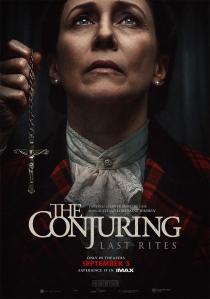
The Conjuring: Last Rites (2025):
Director: Michael Chaves
Screenwriters: Ian Goldberg, Richard Naing, David Leslie Johnson-McGoldrick
Starring: Patrick Wilson, Vera Farmiga, Mia Tomlinson, Ben Hardy
The Plot: Occult investigators Ed (Patrick Wilson) and Lorraine Warren (Vera Farmiga) come out of retirement for One Last Job when the cursed mirror from their very first case returns to menace a family in Pennsylvania. The entity in the mirror also seems to be after the Warren’s now adult daughter Judy (Mia Tomlinson). Will they rid the world of this evil once and for all? Will Ed learn to get along with his daughter’s boyfriend? Will the epilogue pull heavily from the final scene of Raising Arizona?
The Conjuring: Last Rites purportedly wraps up the saga of the Warrens, although a 1940s-set prequel just wrapped filming in Albany and Schenectady. Based on the case files of real-life husband and wife “occult investigators” Ed and Lorraine Warren, the Conjuring films have settled into a comfortable groove. I didn’t find Last Rites particularly frightening, but I think that may be by design. These are crowd-pleasing horror films, meant to be entertaining for a wide audience. Some of the sequences reminded me a little of the scene in Monsters University where they explain how to scare adults. By-the-numbers, but there’s something almost comforting about that straightforward style.
The real couple may have been frauds, but the fictional versions of Ed and Lorraine have always made for appealing protagonists. Wilson and Farmiga have good, lived-in chemistry. While the script is a little blunt at times, they invest their characters with the right amount of emotional weight. Their reactions to Judy’s engagement feel true to life, bittersweet and hopeful. As someone who hasn’t followed the series all the way from the beginning, I found it surprisingly moving.
The sets, costuming, and cast all lend the film a sense of authenticity that isn’t always present in the script. Mia Tomlinson brings a fresh-faced openness to the proceedings. Some of the best parts of the film are the establishing scenes of the working class Pennsylvania family being haunted. The three generations of Smurls are a tight-knit family crammed into an old house, talking over each other and jostling for space. The dynamic feels natural.
Afterwards, Richard Lovrich hosted a discussion with Hollywood Production Designer Naaman Marshall, who didn’t work on Last Rites but did work on the the upcoming prequel that just finished shooting in Albany and Schenectady, The Conjuring: First Communion. His other recent credits include Alien: Romulus, Knock at the Cabin, Old, and Mortal Kombat. Lovrich was clearly excited to have Marshall there, and the latter had interesting things to say about his work. I especially liked the point he made about needing to go back further when sourcing items for period pieces. If a film is set in 1943, you can’t only use cars from the 1940s, unless all the characters are rich. People hold on to objects like furniture and clothing, especially when those objects are built to last.


Pingback: Rooster Illusion Goes to the SciFi Schenectady Film Fest | Rooster Illusion
I really like the last point you (and Lovich) make! Now I will start noticing whether a movie I’m watching uses older items. You’re reviews are thoughtful and helpful. Thanks!