September 20th: A strong finish to a solid festival. By the nature of their genre, the films in the Fantasy Shorts block did not dwell on AI. It was a nice break, though I appreciated the way that Metropolis brought everything thematically full circle.
Fantasy Short Film Block
Stuck 2gether (2026)
Las Hadas de la Sombra (2026)
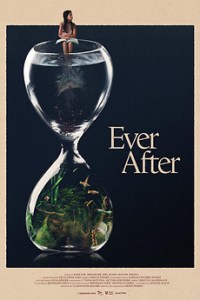
Ever After (2025)
Em & Selma go Griffin Hunting (2025)
Eiru (2025)
Thinking of this from the festival programmer’s perspective, Stuck2gether may have been the Fantasy Short counterpart to the AI-generated Deep Space Degenerates of the Sci-Fi Shorts block. Not because Stuck2gether features any AI, but because it’s another example of “non-traditional” filmmaking. The short is a “vertical”, shot on a phone and intended to be viewed on one as well. It doesn’t quite land on a big screen, but I can’t really fault it for that. The editing could be a little tighter to appeal to a smartphone audience (kids these days and their short attention spans, etc.).
The next two films in this block were also the highlights for me. Las Hadas de la Sombra calls to mind early Guillermo del Toro with its child protagonist and dark fairy tale backbone. A young girl accompanies her brother and single mother to live on the chicken farm where her uncle works. When Pablita is unable to bring herself to eat the only food available (yucca and eggs), her mother tries to scare her straight with a bed-time story that may be more real than any of them realize. The whole cast is solid. First-time actress Milla Tomasovic (alongside her real mother and brother) gives a natural, winning lead performance as Pablita. Director Ryan Jenkins makes good use of his limited budget.
Austrian film Ever After features another excellent lead performance from a young actress. Rada Rey plays Belly, a quiet and lonely girl dealing with the onset of puberty at a new school in a foreign country. She fantasizes about becoming a mermaid, of trading her troubled home life and troublesome human parts for a solitary existence underwater. Director Helen Hideko hits just the right tone; serious and thoughtful like its protagonist, rather than maudlin or over-emphatically attempting to prove its feminist bona fides.
Em & Selma go Griffin Hunting, on the other hand, is too slick for its own good. Its aspirations to be a feminist parable are hampered by its clunky script, checking off boxes in a female empowerment narrative. I certainly don’t believe that men are incapable of telling insightful stories about women, but something about this one just screamed “a man wrote this”. It suffered in comparison to Ever After‘s insight and restraint.
Irish animated film Eiru was made in a lab to teach children about girl power and the importance of sharing resources. I don’t have anything against those lessons, but I learned them in the 1990s so the message was kind of wasted on me. Good animation, though.
After the Short Film block, festival Creative Director Richard Lovrich hosted a Q&A with Stuck2gether director/star Jermaine Wells and the Las Hadas de la Sombra team, director Ryan Jenkins and producer Spencer Sherry. The filmmakers discussed working with first-time actors, making the most of limited budgets, and the important role that film festivals play in supporting independent cinema. Wells, Jenkins, and Sherry came across as passionate artists.
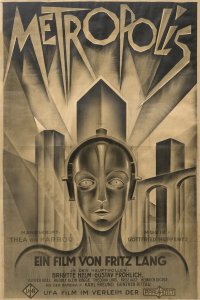
Metropolis (1927):
Director: Fritz Lang
Screenwriter: Thea von Harbou
Starring: Brigitte Helm, Gustav Fröhlich, Alfred Abel, Rudolf Klein-Rogge, Theodor Loos, Heinrich George
The Plot: In the dystopian city of Metropolis, workers toil underground while the upper classes live a life of decadent luxury. After a chance encounter with the saintly Maria (Brigitte Helm), rich playboy Freder (Gustav Fröhlich) ventures forth to learn more about his “brothers and sisters” below the surface. He discovers exploitation, suffering, and a looming revolution against the system created by his father, city founder and ruler Joh Fredersen (Alfred Abel). Meanwhile, Fredersen and the sinister inventor Rotwang (Rudolf Klein-Rogge) conspire to replace Maria with a robot lookalike under their control.
Metropolis is a brilliant, timely film and it’s unfortunate that so many of the people involved in its production went on to become Nazis. Fritz Lang and Brigitte Helm fled Germany in the 1930s and Alfred Abel died in 1937, but the others I listed above…oof. The film isn’t responsible for the evils some of its creators went on to enable, nor should it be. Knowing the future unavoidably complicates the legacies of old movies. That future isn’t always so dark. Metropolis’s influence can be felt everywhere in the ensuing century. Now-classic science fiction films like Blade Runner and Dark City can trace their lineage back to Fritz Lang’s modern Babylon of towering skyscrapers.
On its own merits, Metropolis is groundbreaking cinema. Roger Ebert referred to it as “the summit of German Expressionism” in his 2010 review of the newly-restored version including lost footage re-discovered in Argentina. The story is basic, more urban fable than speculative fiction. The combination of miniatures, sets, and hundreds of extras creates a vast sense of scope. It’s no wonder that Metropolis has remained a visual reference point for so long. This city never looks “real”; it’s like a city in a dream, so true in essence that the real world pales in comparison.
Metropolis‘ tale of downtrodden workers rising up against an entitled, technology-reliant ruling class retains the relevance it has possessed since 1927. As long as the rich stay greedy and the rest of us remain willing to sacrifice freedom for convenience and illusory security, people will be able to keep screening this film and remarking afterwards “it just feels so modern!” Plus ça change…
The screening I attended was of the version from the 2010 restoration and featured live improvised accompaniment from Order of the Illusive. Technically, we saw 2/3 of the group, but musicians Brandon Reed (on pencilina, drums, and electronics) and Zach Layton (on a 17 string bass guitar and electronics) were more than up to the task. Their experimental sound—to this film critic’s untrained ear, a combination of prog rock and dark electronica—complemented the film’s larger-than-life visuals and dream logic.


Pingback: Rooster Illusion Goes to the SciFi Schenectady Film Fest | Rooster Illusion