July 15th: A light day, in terms of the number of movies watched. In terms of subject matter, we’ve got a lurid silent epic charting a convent girl’s journey from kidnapping victim to brothel madam, followed by a heartbreaking documentary about processing private grief while reckoning with the Rwandan genocide.
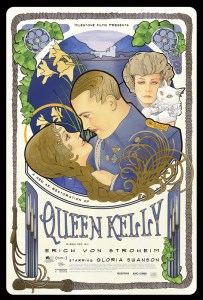
Queen Kelly (1929):
Director: Erich von Stroheim
Screenwriter: Marian Ainslee, Benjamin Glazer, based on an original story by Erich von Stroheim
Producers: Joseph P. Kennedy, Gloria Swanson, Erich von Stroheim
Starring: Gloria Swanson, Walter Byron, Seena Owen, Tully Marshall
The Plot: Handsome party boy Prince Wolfram (Walter Byron) is betrothed to the mad hedonist Queen Regina V of Konberg (Seena Owen). After the Queen catches him carousing with other women, she decides to punish her hungover Captain of the Guard/fiance by sending him on maneuvers all day in the hot sun. While out riding, Wolfram takes a shine to a beautiful local convent girl, Kitty Kelly (Gloria Swanson). Later that night, after finding out that his wedding date has been moved up to the next day, Wolfram sneaks into the convent and kidnaps Kelly. Back at the castle, he gets her drunk and professes his love to the starstruck teenager. A furious Queen Regina V catches them and drives Kelly out of the castle while whipping her. Kelly attempts suicide by drowning, then receives a telegram informing her that her Aunt in German East Africa is dying. In Africa, Kelly is forced to marry a vile Dutchman before inheriting her Aunt’s role as madam of a brothel. Some years later, Prince Wolfram tracks her down. Queen Kelly, as she’s been dubbed by the brothel’s patrons, initially rebuffs his advances, rightfully telling him to “go to Hell”. Her vile Dutch husband dies in a bar fight and Queen Regina V is assassinated, freeing Kelly and Wolfram to live happily ever after. The end.
That was much longer and more detailed than my normal plot synopses, but I think it will be necessary background to explain the different versions of the film that have existed throughout its storied history.
Queen Kelly is a film with a fair amount of baggage. Movie star Gloria Swanson tapped celebrated director Erich von Stroheim to make an independent, lavish epic. The film was shot in sequence but canceled halfway through production. Swanson herself was responsible, and oversaw an alternate ending that cut out the African brothel act entirely. The Swanson Ending implies that Kelly kills herself, and a contrite Prince Wolfram visits her body in the convent.
The version I saw at MIFF is a restoration by Dennis Doros, using von Stroheim’s original script and inter-titles in an attempt to recreate the film according to the director’s vision. As a restoration, Queen Kelly is a staggering achievement and a valuable piece of film history. As a film, it’s somehow both overwhelming and underwhelming. The plot is banana pants, but outside of Kitty Kelly, the characters aren’t particularly engaging. Prince Wolfram comes across more as a spoiled rich creep than a dashing romantic lead (I didn’t realize until about halfway through the film that his scenes were even intended to be romantic). Queen Regina seems at first like an interesting antagonist, but ends up being a plot device.
I haven’t seen the version of the film with the Swanson Ending, but she might have been right about cutting the scenes in Africa. She may have found them distasteful; to me they’re just baffling. Then again, maybe more dramatic epics should feature a left-field brothel inheritance to wrap up the plot. I definitely can’t complain about it being formulaic.
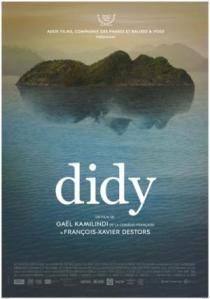
Didy (2024):
Directors: François-Xavier Destors, Gaël Kamilindi
Producer: José-Michel Buhler
Featuring: Gaël Kamilindi, Kayije Kagame
The Story: As a child, filmmaker Gaël Kamilindi was sent to Switzerland from Rwanda to escape the violent persecution of Tutsis. Now, he returns to Rwanda to learn more about his mother, Didy, who died of AIDS in 1991. Interviewing Didy’s surviving relatives and friends, Gaël not only reckons with his personal loss, but with the staggering enormity of the Rwandan genocide. How can a child reconstruct the mother he barely knew, when so little record remains? How can generations of Rwandans chart a path forward in a land “where no place, however, is innocent”?
Didy (pronounced “dee-dee”) is such a personal film that it almost feels wrong to review it as a standard documentary. However, it does succeed on that level. Destors and Kamilindi create a poetic, moving tribute to the titular woman without glossing over any of the associated pain. Gaël’s search for his mother is literal and figurative. He wants to find her body so that she can be buried with family, but quickly realizes the futility of a task that most people can take for granted. He instead manages to celebrate her life; interviews with Didy’s sisters and friends—those who were able to flee the country before 1994—paint a portrait of a complicated, intellectual woman. Loyal to her loved ones and determined to live life on her own terms, defiant in the face of decades of persecution.
The family’s private loss is inseparable from the surrounding historical tragedies, the AIDS epidemic and Rwandan genocide. But what are epidemics and genocides if not personal? Hundreds of thousands of private losses, grief on an unimaginable scale. Though Didy does not shy away from these harsh realities, the warmth with which Didy’s family and friends share their memories of her with her son gives the film a feeling of catharsis. Gaël cannot fully accept and move on from his mother’s passing until he sees her as she really was in life. Destors and Kamilindi draw a parallel between this and the country’s ongoing efforts to commemorate the victims of the genocide.
I don’t know what Didy‘s distribution future looks like, but I would recommend watching the film if you get the chance. Just clear your schedule afterward. If you’re anything like me, you’ll need time to sit with it for a bit.


Pingback: Rooster Illusion Goes to MIFF 29 | Rooster Illusion