July 13th: My first full day at MIFF. Featuring another fantastic performance from Greta Lee, a stylish lucid dream of a film from the Philippines, and a riveting account of doomed arctic exploration by hot air balloon.
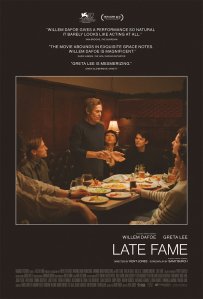
Late Fame (2026):
Director: Kent Jones
Screenwriter: Samy Burch, based on the novella by Arthur Schnitzler
Producers: Christine Vachon, Pamela Koffler, Jackie Langelier, Ethan Lazar, H.S. Naji, Mason Plotts, Danny Roberts, Taylor Shung
Starring: Willem Dafoe, Greta Lee, Edmund Donovan
The Plot: Postal worker Ed Saxberger (Willem Dafoe) unexpectedly finds himself the center of attention when a group of young writers declare themselves fans of his long-forgotten book of poetry published in the 1970s. Led by the somewhat pretentious Meyers (Edmund Donovan), the Enthusiasm Society adopts the older man as one of their own. But do they have ulterior motives? What of the group’s lone female member, flamboyant yet mysterious actress Gloria (Greta Lee)? Does Ed even still want to be a poet?
The Enthusiasm Society could so easily have been irritating, but the film finds exactly the right tone. Jones has a great deal of sympathy for his characters, including this group of pretentious, ridiculous young men. Ed’s worn-down affability and growing wounded sensitivity are treated with the same light touch, as are Gloria’s outward delusions of grandeur and hidden pragmatism. Dafoe and Lee both give typically excellent performances. Watching this the day after Past Lives was especially rewarding. Talk about range.
Late Fame isn’t so much about fame as it is about managing disappointment and finding the good in ordinary life. Ed is flattered by the attention he receives from these young men, but does he really need to be “rediscovered”? Does Gloria need to perform to accolades on Broadway to “make it” as an actress? Like Past Lives, this is a thoughtful, grown-up movie.

Filipiñana (2026)
Director: Rafael Manuel
Screenwriter: Rafael Manuel
Producers: Bianca Balbuena, Jeremy Chua, Omar El Kadi, Bradley Liew, Rafael Manuel, Alex Polunin, Nadia Turincev
Starring: Jorrybell Agoto, Teroy Guzman, Angeli Bayani, Nour Hooshmand, Pipay Kipay, Micah Musa
The Plot: Quiet teenager Isabel (Jorrybell Agoto) starts working as a tee girl at an opulent golf resort in Manila. Beneath the merciless sun, a simple errand takes her on a tour of the grounds. Will she find what she’s looking for? What secrets does the resort hold?
Filipiñana is an odd, entrancing film. Director Rafael Manuel has a tightly-controlled aesthetic sensibility. Every shot is crisp and precise, yet the film manages to have a languid dream-like feel. Manuel’s style feels situated somewhere between Wes Anderson and Sofia Coppola. Filipiñana is in no way derivative, though. This is all Manuel.
The film has more on its mind than crafting immaculate vibes. Isabel’s Odyssey leads her through a world defined entirely by enormous wealth disparity. The privileges of the ultra rich hang in the air like a threat in every scene. Pepper in references to colonialism and government corruption and you have a pointed satire beneath the dollhouse aesthetic.
Given how well Filipiñana did at Sundance, I’m assuming that the film will be available to watch once it’s finished the festival circuit. It should be a hit with the A24 crowd, but there’s more to it than superficial cool.
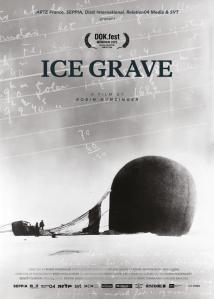
Ice Grave (2025):
Director: Robin Hunzinger
Screenwriter: Robin Hunzinger
Producers: Cédric Bonin, Pascaline Geoffroy, Maxime Owyszer
The Story: In 1897, a three-man polar expedition vanished while trying to reach the North Pole via hydrogen balloon. Thirty-three years later, their remains were discovered on a remote island, along with the explorers’ journals and undeveloped rolls of film. This documentary uses their own words and images to bring the expedition to life.
Ice Grave is a haunting film, sometimes to its detriment. Director Robin Hunzinger presents the expedition as a mystery waiting to be solved, using ominous narration and a droning electronic soundtrack to supplement the already effective sound design. Some of the most effective moments are the most simple, when the sound of the howling wind and creaking ropes accompany stark black and white photographs taken by the men themselves.
I didn’t know much about the film going in, so I was surprised to discover partway through that the mystery had already been solved in 1930. Three men tried to sail a hydrogen balloon to the North Pole, it crashed, and they died in the ice. Tragic, but not exactly enigmatic. Hunzinger interviews several academics who have been studying the expedition and the changing environment. Their contributions are interesting, but the film starts to spread itself too thin. In trying to convey the full experience of the expedition, the later discovery of the explorers’ remains, and the ways that climate change has altered the landscape, Hunzinger ends up short-changing each element.
I understand why he chose to tell the story the way he did, using the actual journal entries and photographs, but a more focused approach might have made for a stronger film. It doesn’t help that the “full picture” requires him to speed through one of the most interesting parts of the whole tale: One of the men had just gotten engaged before the expedition left, and his love letters to his fiancee were discovered with his body. The woman was still alive in 1930, in her late 50s, married and living in England. There’s no written record of what she said or did upon receiving the letters, but when she died she had her husband bury her heart beside her former lover’s grave. Maybe somebody will make a movie of that someday.
Ice Grave is not a bad film by any means, I just found it a little frustrating. Your mileage may vary.


Pingback: Rooster Illusion Goes to MIFF 29 | Rooster Illusion