
Godzilla Minus Zero (2026):
Director: Takashi Yamazaki
Screenwriter: Takashi Yamazaki
Starring: Ryûnosuke Kamiki, Minami Hamabe, Hidetaka Yoshioka, Masami Nagasawa, Min Tanaka
The Plot: Two years after a ragtag group of civilians defeated Godzilla, Japan is devastated by the appearance of a new kaiju, the sinister King Ghidorah. Kôichi Shikishima (Ryûnosuke Kamiki), the pilot who defeated Godzilla in the previous film, and his now-wife Noriko Ôishi (Minami Hamabe), who miraculously survived a Godzilla attack, find themselves drawn back into the fray in unexpected ways. Their friend, the mild-mannered but haunted Dr. Noda (Hidetaka Yoshioka) once again leads the effort to protect Japan from the monster menace. This time, human ingenuity might not be enough. What moral boundaries will these allies need to cross? When Godzilla returns, will anything be left to save?
Godzilla Minus One, the previous movie in the series to which this is a direct sequel, is a great film; a moving post-war drama about broken survivors trying to forge a better, kinder path forward for themselves and for their country. That film uses Godzilla to explore the national trauma of the atomic bomb and the lies of the Imperial government. It’s up there with the original Gojira as a work of art, and I say that as both a lifelong Godzilla fan and as a film critic.
I am not entirely convinced that Godzilla Minus One needed a sequel, but returning director/screenwriter Takashi Yamazaki has done an admirable job following in his own giant footsteps. While Godzilla Minus Zero is bigger—often literally, as the first Japanese movie filmed for IMAX—and more violent, it doesn’t sacrifice the human element that made its predecessor so wonderful. The script pays attention to the hopes, desires, and conflicting duties of its characters. It’s also more concerned with ethics than most modern blockbuster films, although the Godzilla series has never shied away from being About Things*.
Yamazaki remains adept at building set pieces grounded in human stakes. An early aerial sequence is especially effective, mercilessly building tension. While the film follows the same basic structure as most Godzilla movies, the characters are so engaging and the filmmaking so accomplished that it never matters how much of the plot the audience can predict; in the moment, the human stakes feel real. Each human casualty has weight to it, carrying on the themes introduced in Godzilla Minus One‘s story of a former kamikaze pilot and other veterans finding a reason to live after being abandoned by a government that placed little value on human life.
That the script spends so much time developing the characters is to its credit, but the film as a whole isn’t quite as focused as Godzilla Minus One. It’s still a thoughtful, well-made film, it just feels a little busy at times. The introduction of a second monster leads to double the requisite scenes where characters figure out the creature’s whole deal and then concoct a plan to stop it. While Yamazaki never loses sight of his characters, there are only so many ways you can play a “but doctor, that would mean…” scene, and I have seen many.
The new King Ghidorah design is a good match for this version of Godzilla, coming across as cruel and predatory (and aesthetically a little ugly, if we’re being honest). A part of me will always miss the men in suits, but Yamazaki makes the most of the freer movement afforded by CGI. Godzilla and King Ghidorah both have a sense of weight and solidity that is often missing from digital creations. The final fight between the two monsters is sure to please a certain type of Godzilla fan, being a more graphically violent version of something that’s otherwise played out along similar lines many times before. I love a good kaiju brawl, but this one rubbed me the wrong way.
Godzilla Minus Zero‘s R-rating did cause me to raise an eyebrow when it was first announced. Even the weird and slightly upsetting Shin Godzilla managed to get away with a PG-13. Now that I’ve seen the film, I appreciate the rating as an artistic decision. The monster-on-monster violence may not entirely work for me, but the film’s frank depiction of the aftermath of Hiroshima felt appropriately grim, as did Yamazaki’s homage to the hospital scene in the original Gojira. In these instances, the director seems to be emphatically repeating the previous film’s anti-war message, forcing audience members to confront something approaching the reality of civilian casualties (something no film can ever fully capture).
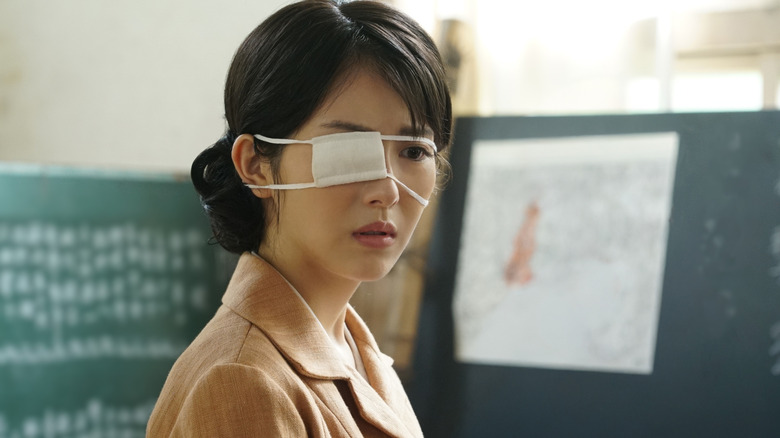
What truly makes this an adult movie isn’t the violence, but the way the script actually engages with its themes and moral dilemmas. Returning characters Kôichi and Noriko, now married and trying to provide for their adopted daughter, find themselves torn between parental duty and a sense of civic responsibility. When you’re the pilot who originally defeated Godzilla, how can you let a less-experienced pilot face a new monster in your stead? When you’re a parent, how can you risk your life? Watching the film, I was reminded of Terry Pratchett’s repeated line “personal isn’t the same as important”**. Yamazaki’s characters bear heavy burdens. They are humble yet competent experts, haunted by past failures and unable to turn away from their duty to act.
In addition to these questions of obligation and self-sacrifice, the film also addresses the ethics of nuclear warfare from a direction not often seen in the Godzilla franchise. Hiroshima and Nagasaki haunt these films as they do Japan. Godzilla Minus One‘s depiction of the American military as powerful and largely indifferent to the needs of smaller countries will be familiar to anyone who’s seen The Return of Godzilla (a.k.a. Godzilla 1984) or Shin Godzilla. This film may be the first in the franchise to flip the script and have Japanese characters debate the use of an atomic bomb stand-in from the perspective of those using the bomb.
When the humans inevitably find that they are unable to defeat King Ghidorah, they devise a plan to lure Godzilla to do battle with the new monster. Realizing that the ability to lure could mean the ability to control, certain minds leap to warfare. Could Godzilla be the next nuclear bomb? A way to avenge the dead in Hiroshima and Nagasaki? If that’s a possibility, is it ethical to use this “weapon” once, even if it’s against another monster?
That the movie genuinely wrestles with these ethical quandaries instead of gesturing vaguely at a theme and expecting a pat on a back sets it apart from its American counterparts. Even the idea of letting two monsters duke it out and then killing the wounded victor is referred to as “sinful”. The characters in Godzilla Minus Zero care deeply about the morality of their actions. Dr. Noda and his protege Ms. Aoyama share the difficulties of continuing to lead after costly failures. Kôichi and Noriko wrestle with the chosen burdens of parenthood and the possibility of becoming an unwilling instrument of war.
Godzilla Minus Zero may not quite reach the same heights as its predecessor, but it’s a worthy follow up. The film features excellent performances from actors returning and new—Hidetaka Yoshioka is a highlight, giving a wonderfully understated performance as Dr. Noda—and a thoughtful script. Composer Naoki Sato delivers another great score; as delighted as I always am to hear Akira Ifukube’s original music, I was also very glad to hear Sato’s theme from Godzilla Minus One again. The film is both a fine entry in the Godzilla canon and that rarest of things, a mature blockbuster film.
*Nuclear war, environmental destruction, pollution, natural disasters, childhood bullying…
**In addition to being a huge Godzilla nerd, I’m also a dedicated fan of Terry Pratchett’s Discworld series of comedic fantasy novels, which are always laugh-out-loud funny and frequently also works of great moral clarity.

